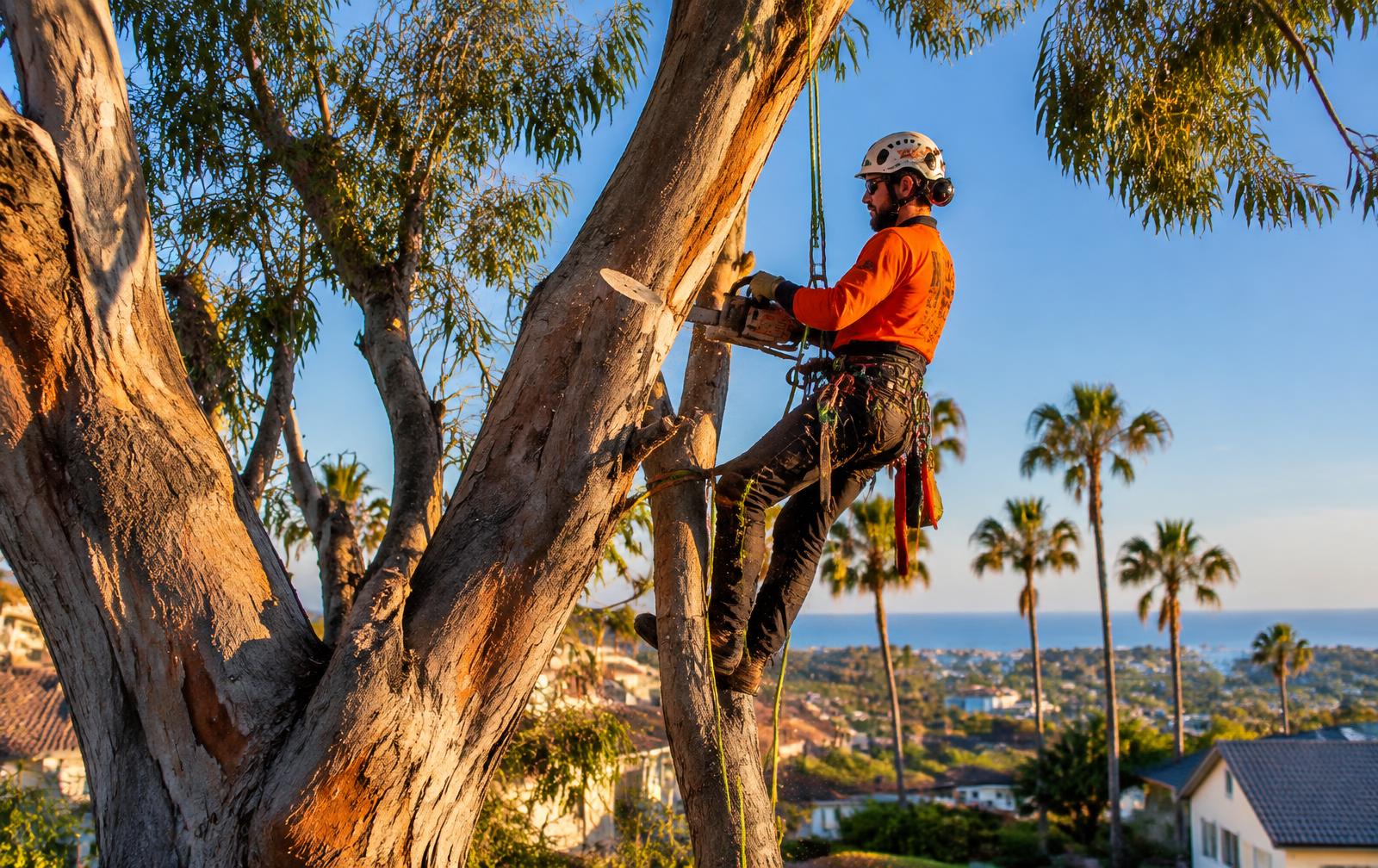
What urgent tree work involves
Emergency tree work focuses first on immediate hazards and controlled access to the affected area. A local professional may evaluate a partially failed tree, a suspended limb, or a trunk resting on a structure. Removing these materials can require specialized planning because broken wood may be under tension and supporting branches can shift unexpectedly when weight is moved or released.
The initial objective may be limited stabilization or removal of the immediate obstruction, with full cleanup scheduled separately. A tree professional does not replace emergency responders, the utility, or a building specialist. If anyone is injured or there is an immediate threat to life, call 911. For downed or involved electrical lines, stay away and contact the utility from a safe location.
Situations that need urgent assessment
A newly leaning tree with disturbed soil, a major split, or a broken limb caught overhead warrants keeping people out of the potential fall area. A tree lying across an occupied building or blocking a necessary exit can introduce additional hazards. Do not stand beneath damaged branches to take photographs, and do not assume a fallen tree has finished moving.
Wind damage is not the only cause of urgent requests. A previously hidden defect may become apparent during calm weather, or a heavy branch may fail without an obvious storm. Describe what changed, what the tree is touching, and whether people can avoid the area. Let a qualified professional determine the work approach rather than attempting to pull or cut unstable wood yourself.
How an urgent referral works
We connect you with local tree pros and share the nature of the concern so you can discuss availability directly. Provide your location, a safe callback number, and a clear account of the damage. Mention utility involvement or structural contact immediately. Photos can help only if they can be taken without entering the hazard area or approaching damaged wires and branches.
The responding provider should evaluate conditions before committing to a removal sequence. Weather, visibility, utility clearance, access, and equipment availability can affect whether work can proceed. Clarify the immediate scope, authorization, and arrangements for any later cleanup. Ask for evidence of applicable California CSLB licensing and insurance, and keep copies of proposals and photos for your records if it is safe to do so.
- Move people and pets away; contact emergency services or the utility when appropriate.
- Describe the damage and request a provider’s current availability.
- Allow the professional to assess access, stability, and work limitations.
- Authorize the immediate scope separately from repairs or later cleanup.
Factors affecting emergency removal costs
Unstable wood, structural contact, limited access, and specialized lifting or rigging can complicate emergency work. Conditions may prevent the approach that would be used for an intact tree in an open yard. After-hours scheduling and the number of people or machines needed can also influence an estimate, but availability and pricing must be confirmed directly with the responding provider.
Ask what the urgent authorization covers: hazard reduction, removal from a structure, cutting debris into manageable pieces, or complete hauling. Stump grinding and building repairs are often separate matters that need their own scope. If insurance might be relevant, contact your insurer about documentation and coverage; neither a referral nor a tree service estimate establishes whether a particular loss will be covered.
Santa Ana wind and neighborhood concerns
Santa Ana winds can bring down branches and expose weaknesses in large canopies, especially where a tree already has structural defects. Eucalyptus, sycamores, ficus, and palms present different damage patterns, so describe the actual failure rather than relying on the species name alone. Tight residential lots and vehicles parked beneath trees can further complicate access after an incident in Santa Ana.
Overhead utility lines must be treated as hazardous, including when a tree appears to be holding a line above the ground. Leave utility coordination to the appropriate parties and keep others away. Rules can apply to work on city parkway trees or public property; check with the City of Santa Ana about the appropriate process without assuming an urgent situation removes every permission requirement.
Emergency Tree Removal FAQs
Do you guarantee immediate arrival?
No. We are a referral platform. Confirm current availability with the local provider; weather, access, utility hazards, and equipment needs can affect scheduling.
What if a tree is touching a power line?
Stay away, keep others clear, and contact the utility. Call 911 if there is an immediate threat to life. Do not touch the tree or nearby objects.
Can I cut a fallen branch myself?
Damaged branches can be under tension or support other wood. Keep clear and have a qualified professional assess the situation before cutting or pulling anything.
Will homeowners insurance pay?
Coverage depends on your policy and the circumstances. Contact your insurer and preserve documentation when you can do so safely.
Does emergency removal include repairing my roof?
Not automatically. Tree work, structural assessment, weatherproofing, and building repairs may require separate providers and authorizations.