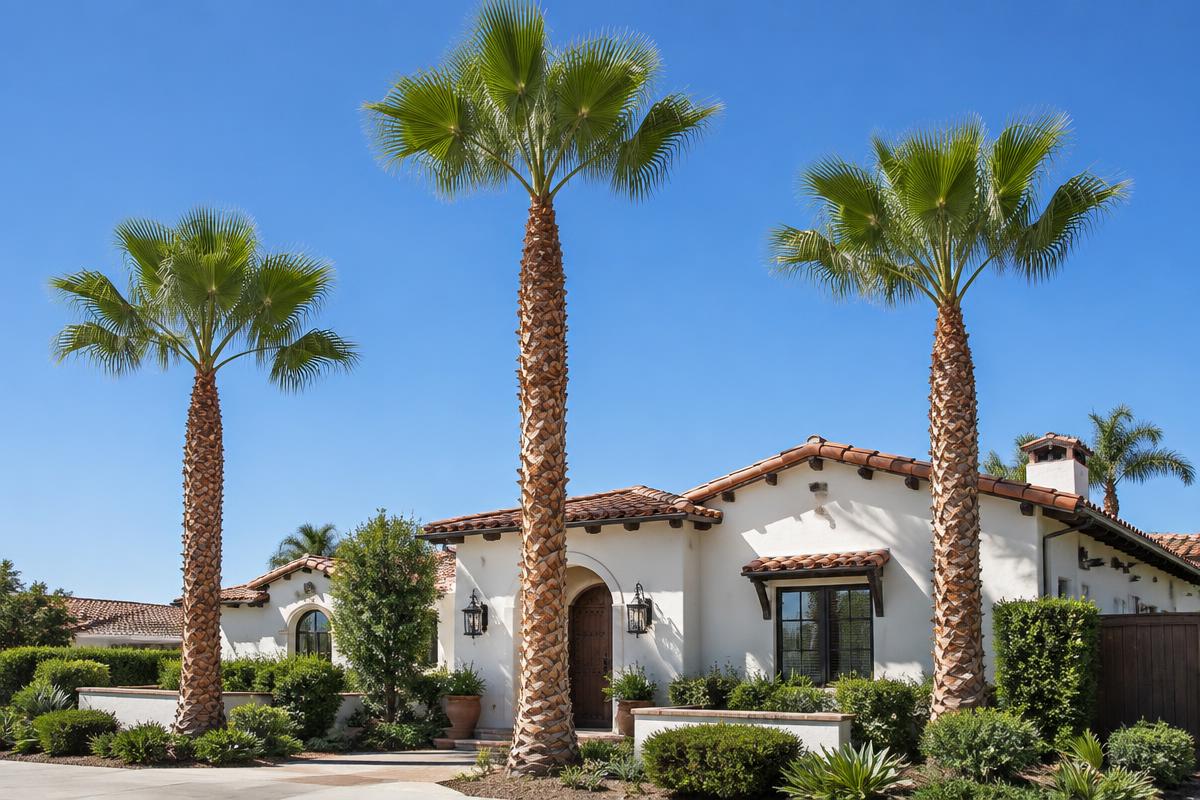
What removing a palm involves
Palm removal may involve taking down the crown and dividing the trunk into manageable sections rather than dropping the entire palm at once. The approach depends on height, condition, access, and what lies beneath. Crown material and trunk sections can be heavy, so a professional will need room to control the work and protect people, structures, and surrounding landscape features.
The above-ground removal and the treatment of the base should be discussed separately. Cutting a palm close to grade does not prepare the site for a new tree or eliminate underground material. Ask whether grinding is feasible, what finish it can achieve, and whether the proposed next use of the space calls for excavation or additional soil preparation instead.
Reasons to consider palm removal
Property owners may request removal when a palm no longer fits the landscape, creates recurring conflicts with buildings, or stands in the way of a planned project. Tall palms can also become difficult to maintain where access is limited. Discuss whether selective maintenance would resolve the concern before deciding on removal, particularly if the palm provides valued character or screening.
A severely damaged crown, an unstable trunk, or a palm that appears dead calls for professional assessment rather than repeated cosmetic trimming. Photos may not reveal the full condition, especially high in the crown. Keep people away if there is loose overhead material or evidence of movement at the base, and describe those observations when requesting help from a local provider.
How palm removal is organized
We connect you with local tree pros who can review the palm’s location and your reason for removal. Show the access route, nearby utility lines, overhead obstructions, and any structures that could be affected. Tell the provider about pools, narrow gates, shared driveways, or protected paving early, because those details can change the equipment and work sequence needed for the project.
Before authorizing work, confirm ownership and any permissions that may apply. Ask for proof of applicable California CSLB licensing and insurance, then review the written scope for crown handling, trunk removal, hauling, and stump treatment. Specify whether material may be staged on the driveway and how the area should be left if grinding or landscape restoration will occur on another visit.
- Describe the palm, its condition, and the planned use of the space.
- Arrange an assessment of access, nearby structures, and utilities.
- Confirm permissions, removal method, cleanup, and stump exclusions.
- Plan any grinding, soil work, or replacement planting separately.
Palm removal cost factors
Height, trunk diameter, crown size, and structural condition influence the removal approach. A palm with difficult crown access or accumulated dead material may require more preparation than its narrow trunk suggests. Tight setbacks, limited space beneath the crown, and nearby roofs can affect whether pieces must be lowered individually and what equipment can reach the work area without damaging the property.
Palm debris can require substantial handling and hauling, so disposal arrangements deserve explicit attention in the estimate. Stump grinding, removal of fibrous material, backfill, and protection of delicate surfaces may be separate items. Ask how hidden problems or access changes would be handled. Comparing written inclusions is more useful than assuming all palm removal proposals produce the same finished site afterward.
Santa Ana palm removal considerations
Mexican fan palms and queen palms appear throughout Santa Ana, from older residential lots to commercial frontage. A tall, narrow profile can hide substantial crown weight and difficult access between buildings. Removing a prominent palm also changes the look of the property, so consider replacement scale, nearby shade needs, and the practical maintenance needs of any proposed new planting.
Santa Ana wind exposure is relevant when a palm has loose material or observed structural concerns, but species alone does not establish the need for removal. Overhead utility lines require coordination with the utility, not improvised cutting. Rules can apply to city parkway palms and other situations; check with the City of Santa Ana when ownership or removal permission is uncertain.
Palm Tree Removal FAQs
Can a palm be shortened instead of removed?
Most commonly planted single-trunk palms cannot be reduced in height by cutting off the top without killing them. Ask about alternatives before approving work.
Can a palm be relocated?
Some palms may be transplant candidates, depending on species, condition, access, and the receiving site. Relocation needs a separate feasibility assessment.
Is the base included in removal?
Not unless the written scope includes it. Confirm whether the job ends with a cut stump, grinding, or a different preparation method.
Does a narrow trunk mean removal is simple?
No. Height, crown weight, condition, nearby structures, and equipment access can make a slender palm difficult to dismantle.
Should a dead palm be left standing?
A dead palm should be assessed for potential hazards in its location. Keep people away from loose material and let a professional discuss appropriate action.