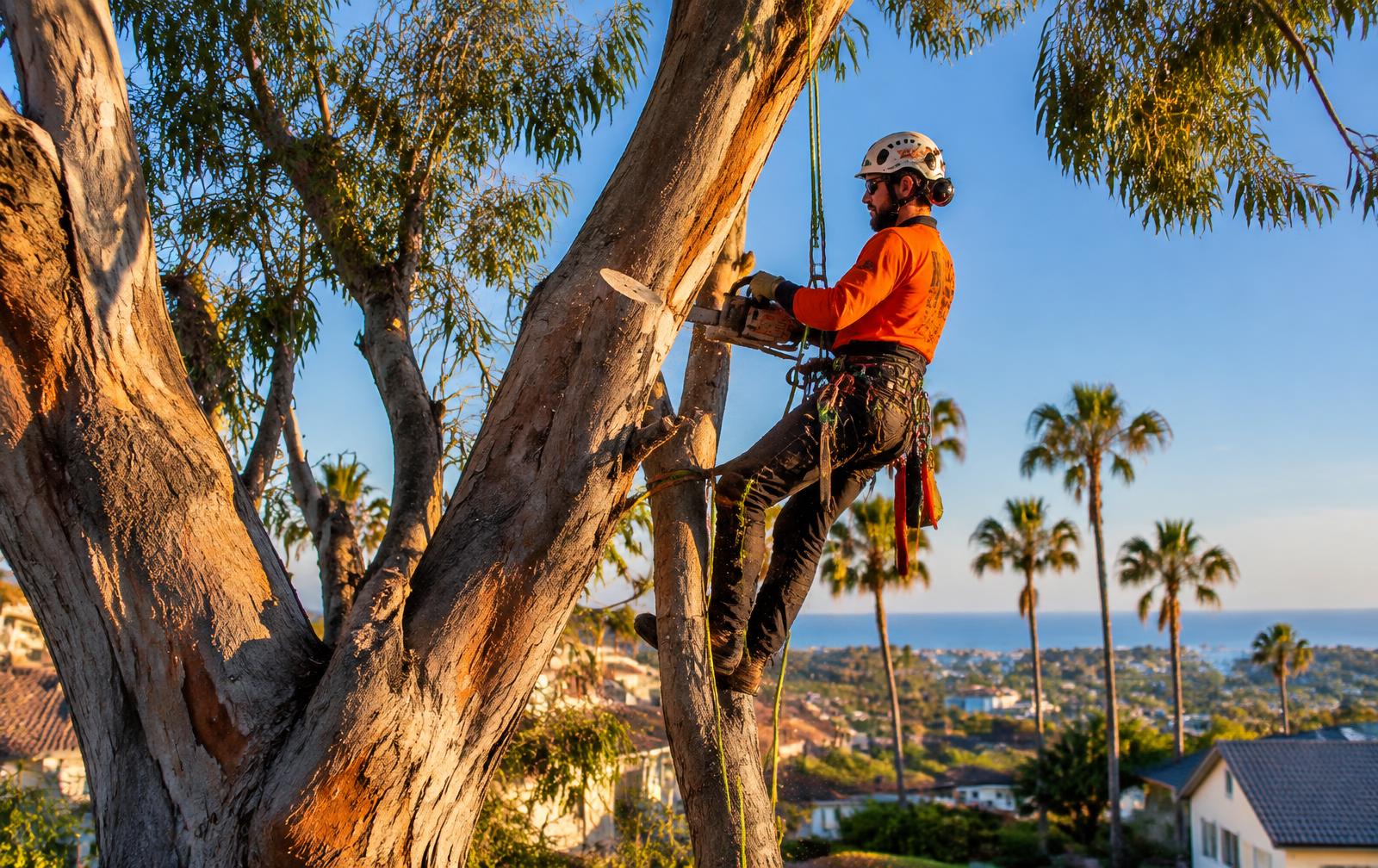
Prepare for the forecast, not just the season
The National Weather Service describes Santa Ana winds as strong winds descending toward Southern California's Pacific coast from inland regions. For a Santa Ana property owner, the practical task is to monitor the forecast for the property's actual location rather than assume that a familiar wind name predicts identical conditions across Orange County. The strength and timing of a particular event matter more to immediate decisions than a general seasonal label. Check official updates before scheduling outdoor work or relying on a previously quiet day.
Tree preparation belongs well before strong winds arrive. A professional assessment, access arrangements, and any justified pruning all take planning; a last-minute rush can leave little time to evaluate recommendations. No inspection or trimming program can guarantee that a tree will withstand every wind event. The goal is to identify concerns, address appropriate maintenance, and reduce people's exposure. Build a household plan alongside the tree-care plan so everyone knows where to shelter and which outdoor areas should be avoided when warnings are issued.
Inspect from the ground and report meaningful changes
Walk the property in calm conditions and observe trees from a safe position. Note dead or hanging branches, visible cracks, an apparent change in lean, damage near the base, or changes after digging or construction. These observations are prompts for professional assessment, not a checklist that lets a homeowner certify a tree as safe. Some important defects may not be visible from the ground. Do not climb, pull on questionable branches, or enter an area below suspended material to obtain a closer photograph.
Tell an arborist what changed and when, including recent branch failures, altered drainage, vehicle impacts, and root-area disturbance. Identify occupied areas, walkways, parking spaces, and neighboring structures that could be affected. ISA TreesAreGood recommends trained, equipped professionals for hazardous tree work and describes arborists' roles in pruning, removal, and emergency care. Ask what the inspection can and cannot determine, what work is justified, and whether any area should remain unused pending action. Keep advice specific to the tree rather than seeking a blanket guarantee for the property.
Prune for a defined objective, not a windproof appearance
ISA's pruning guidance says each cut should have a reason and warns that improper pruning can cause lasting damage. Before wind season, ask about dead or weakly attached branches and specific structural or clearance concerns. Do not translate preparation into a demand to remove as much foliage as possible. A canopy that looks dramatically thinner is not proof of a sound care plan, and a professional should explain the proposed cuts in terms of tree structure, condition, and your site's needs.
Ask whether cleaning, limited clearance pruning, or another targeted approach is appropriate. If reduction is recommended, request an explanation of how the work will retain suitable branches and natural form. Avoid accepting a one-size-fits-all treatment for palms, flowering trees, and broad shade trees. Their structures and care needs differ. Schedule any work for conditions the contractor considers safe, and be prepared for a weather-related change in plans. An approaching advisory is not a reason to insist that a crew climb or cut during hazardous winds.
Make the surrounding property part of the plan
The National Weather Service's preparation guidance includes securing loose outdoor items, checking gutters and shutters, charging essential devices, and identifying a sheltered interior room. Apply that advice alongside tree maintenance. Move or secure lightweight furniture and other objects before wind increases, and decide where vehicles can be parked without exposing anyone to questionable limbs during the move. Keep access routes usable. These practical steps address hazards that pruning alone cannot solve and can be completed without trying to alter a tree at the last moment.
Discuss overhead wires with the appropriate utility or qualified professional; do not personally trim toward them. NWS recommends advance branch clearance around houses and lines, but electrical hazards make utility-related tree work a specialist matter rather than a homeowner preparation task. For a possible City-owned street tree, use Santa Ana's Public Works reporting channels to raise concerns early. The City says its street-tree program maintains City-owned trees. Do not assume a private contractor can independently perform the street-tree work you would request for your own backyard.
During strong winds, stop tree work and reduce exposure
NWS advises going inside a sturdy building during a high wind warning and moving to an interior room or basement. Avoid standing under trees to observe their movement, retrieve small items, or decide whether a branch is about to break. Keep children and pets away from exposed areas. If caught outside, NWS advises avoiding trees and power lines and seeking appropriate shelter. Follow current local emergency instructions; the safest response depends on where you are and the conditions around you.
Stay away from downed lines and anything touching them. NWS warns that lines on the ground may still be live. A tree touching a wire is not an ordinary cleanup job, even if the branch appears small or power seems to be out. Do not move the line, cut the tree, or approach to investigate. Contact emergency services for immediate danger and notify the utility through its emergency reporting channel. A referral request or routine contractor appointment is not a substitute for the appropriate emergency response.
Afterward, assess safely and arrange the right help
Wait until conditions are safe before inspecting from the ground. Keep clear of hanging branches, damaged trunks, leaning trees, and areas where material may still fall. Photograph damage only from a safe location and keep people out of affected spaces while qualified professionals evaluate the next step. Do not assume a branch resting on another branch is stable or that a partly fallen tree is easy to dismantle. Tell the professional whether there are damaged structures, blocked access routes, or any possible electrical involvement.
SantaAnaTreeCare.com can connect property owners with local tree professionals for non-utility assessment and appropriate tree work. It is a referral platform, not emergency dispatch, and it cannot guarantee immediate availability during a widespread wind event. When safe, provide the location, visible damage, access conditions, and any known hazards. Confirm the written scope before cleanup or removal begins, and ask the City about a possible street tree. Good preparation ends with careful recovery, not a rushed attempt to restore the yard before the remaining hazards are understood.
Need help with this?
Learn more about emergency tree removal in Santa Ana or request a free estimate from local tree professionals.