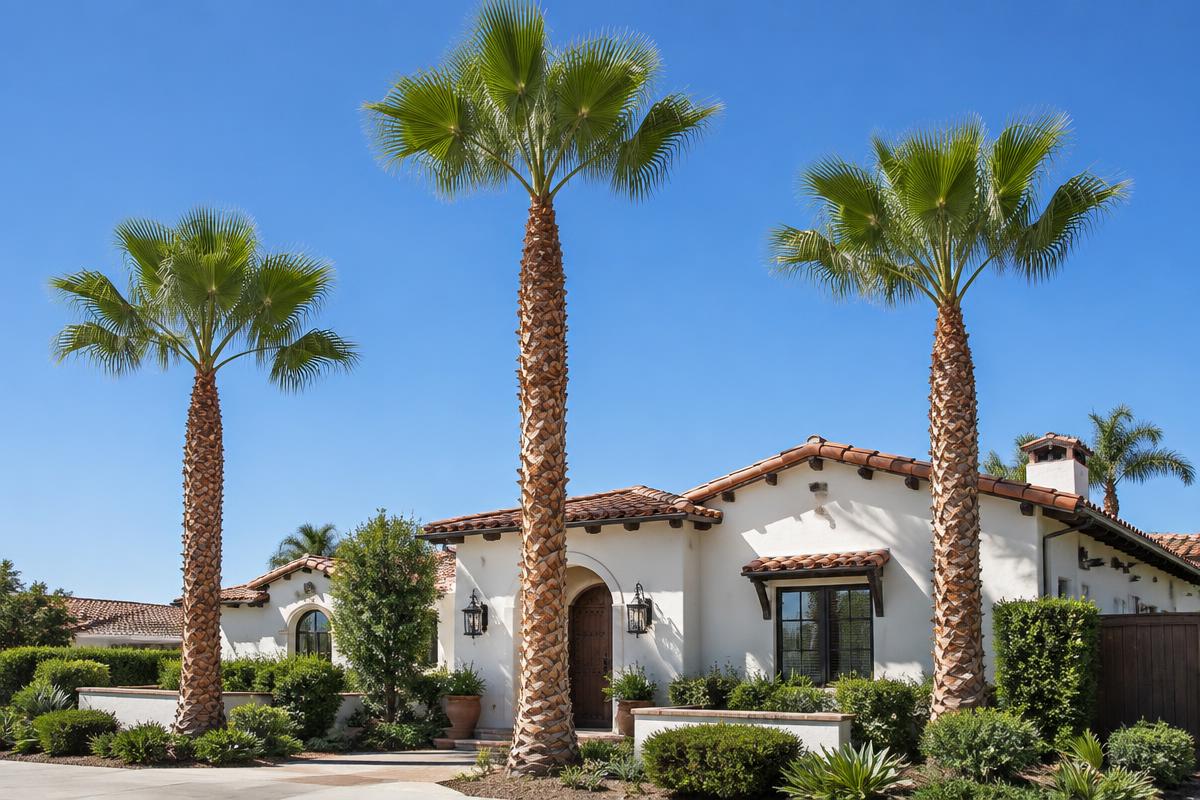
What palm trimming should involve
Palm trimming generally focuses on dead or broken fronds and selected flower or fruit stalks where removal serves a clear purpose. A local professional should identify the palm and assess the crown before recommending work. Green fronds help sustain the palm, so a drastic, upright-only silhouette should not be treated as the standard for a healthy or properly maintained specimen.
The scope should distinguish routine frond removal from removing a retained skirt, cleaning seed stalks, or altering the trunk’s appearance. These are not interchangeable tasks, and unnecessary trunk injury can create lasting problems. Ask how the provider will access the crown, protect surrounding surfaces, and avoid damaging the growing point, which is particularly important to the survival of many single-trunk palms.
Why property owners request palm care
Dead fronds hanging above a path, driveway, or seating area are common reasons to seek an assessment. Loose material can be difficult to judge from the ground, especially on a tall Mexican fan palm. A provider can review what should be removed and establish a work area that keeps people away while heavy or sharp material is being lowered.
Flower and fruit stalks may also create cleanup concerns near pools, pavement, or frequently used entrances. Discuss whether stalk removal is practical and appropriate for your palm rather than assuming all seasonal litter can be eliminated. A discolored or sparse crown deserves separate assessment, because removing additional green fronds will not correct a watering issue, nutrient problem, pest concern, or other underlying cause.
How a palm trimming visit works
We connect you with local tree pros who can review the palm species, approximate height, and the material causing concern. Provide photographs from a safe distance and explain access from the street or driveway. Note nearby roofs, pools, vehicles, and power lines, since the space directly beneath the crown is only one part of planning safe access and debris handling.
Agree on which fronds and stalks are included before the visit. Ask how green foliage and the crown will be protected, whether a retained skirt is part of the job, and where cut material will go. Request proof of applicable California CSLB licensing and insurance. The written plan should make cleanup expectations clear, especially around pool equipment, gravel, and decorative planting beds.
- Identify the palm and describe fronds, stalks, or crown changes of concern.
- Review crown access and the area needed to manage falling material.
- Confirm selective trimming, exclusions, and debris removal in writing.
- Discuss observations that may need further palm health assessment.
What affects palm trimming cost
Palm height and access to the crown are major considerations, but the condition and amount of retained material also matter. A tall palm with a heavy skirt requires different planning from a regularly maintained palm with a few dead fronds. Nearby structures, restricted equipment access, and limited room to handle cut material can increase the complexity of the work.
Clarify whether flower stalks, fruit stalks, old frond bases, or skirt removal are included. Disposal effort can be substantial because palm debris handles differently from typical leafy branches. Multiple palms may require different access setups across the same property. Compare estimates using a matched scope and avoid judging value by how many green fronds a provider is willing to cut away.
Caring for palms in Santa Ana
Mexican fan palms and queen palms are familiar parts of Santa Ana landscapes, but they should not receive identical treatment simply because both are palms. Their crowns, retained material, and care needs differ. In the area’s dry conditions, a thinning crown or unusual discoloration deserves investigation rather than aggressive trimming that makes an already stressed palm look even more sparse.
Santa Ana winds can move loose fronds and stalks, making regular observation helpful around parking and pedestrian areas. Trimming cannot make a palm stormproof, and excessive green-frond removal is not a sound shortcut. Keep clear of palms near overhead wires and contact the utility for guidance. For city parkway palms, rules can apply; check with the City of Santa Ana before arranging work.
Palm Tree Trimming FAQs
Should my palm get a hurricane cut?
Avoid drastic removal of healthy green fronds. Ask a qualified professional for species-appropriate trimming focused on dead, broken, or otherwise justified material.
Can trimming stop all palm seeds from falling?
Removing selected flower or fruit stalks may reduce litter, but timing, species, and accessibility affect the result. Complete prevention should not be assumed.
Do brown fronds mean the palm is dying?
Older fronds naturally decline, but extensive browning or crown changes can have other causes. Have the pattern assessed before removing more foliage.
Is removing the old skirt included?
Only if it is listed in the scope. A retained skirt can involve additional access, handling, and disposal considerations.
Should climbing spikes be used for routine palm care?
Ask the provider to explain an access method that avoids unnecessary trunk injury. Suitability depends on the palm and site, not simply convenience.