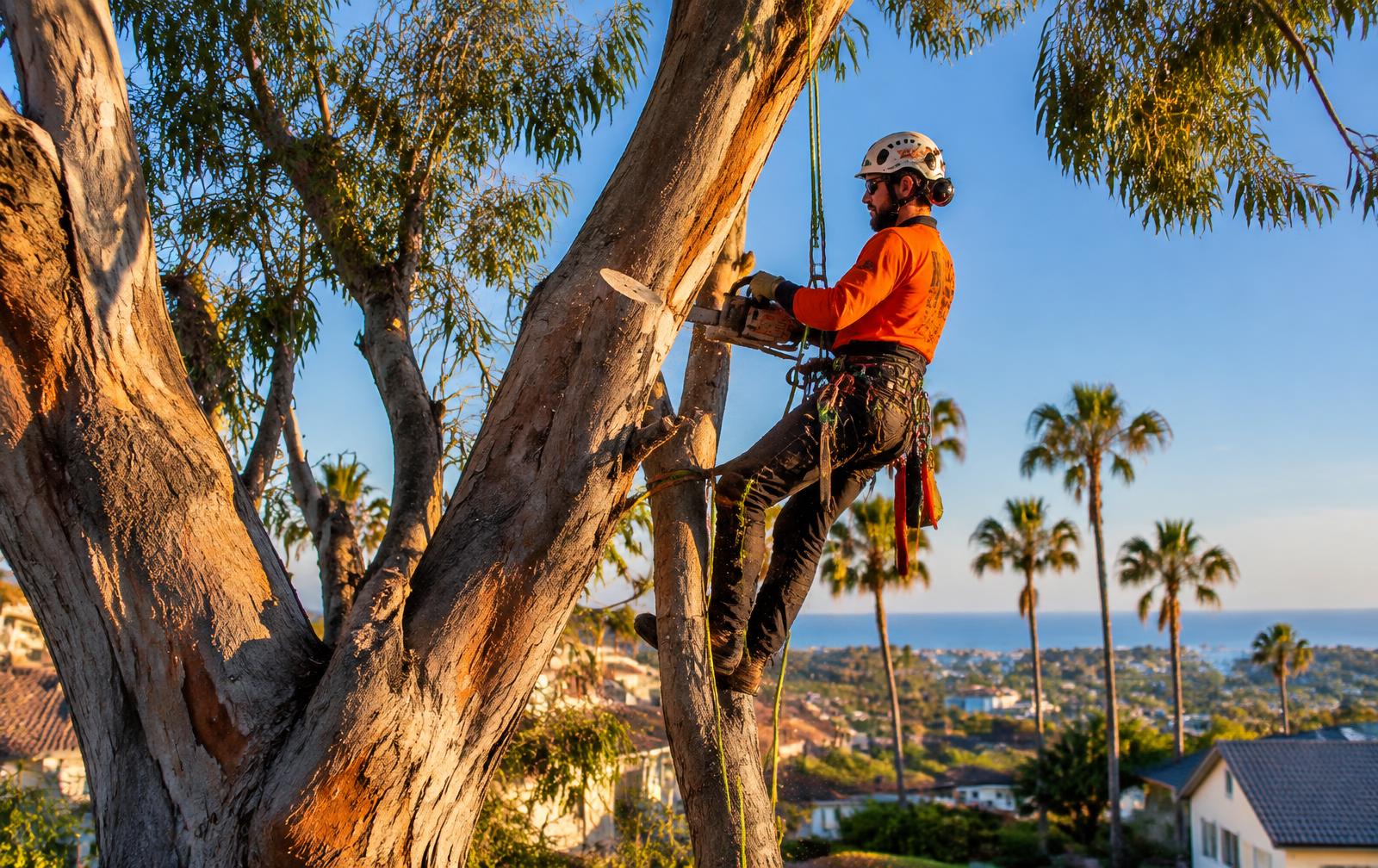
What tree removal involves
Tree removal means taking down the trunk and canopy while controlling where each section lands. A local professional will assess whether a tree can be felled into an open area or needs dismantling in smaller pieces. Nearby roofs, fences, planting beds, and neighboring properties influence the equipment and working space needed for a carefully planned removal on your particular site.
Removal does not automatically include the stump, underground roots, or restoring the planting area. Ask for a written scope describing the cut height, wood handling, debris hauling, and protection of surrounding surfaces. If the tree might be retained through pruning or treatment, an assessment by an ISA-certified arborist can help you compare preservation with removal before authorizing irreversible work.
Common reasons to consider removal
Homeowners often seek an assessment after noticing major dead limbs, a widening trunk crack, fungal growth near the base, or a recent change in lean. These observations do not establish the cause or prove that removal is necessary. They give a professional useful starting points for evaluating the tree, its surroundings, and the consequences of a possible failure.
Other projects begin with recurring conflicts: a tree growing into a building, insufficient room for mature roots, or a planned addition that may disturb the root zone. Explain the full project rather than asking only for a cutting quote. Removing one tree can expose neighboring plants to more sun and wind, so replacement planting and shade loss deserve consideration too.
How a removal project works
We connect you with local tree pros who can review the location and discuss the outcome you need. Photos help establish the general situation, but concealed defects, access restrictions, and overhead obstacles often require an on-site evaluation. Tell the provider about shared driveways, gates, pets, irrigation, and any neighboring property that might be involved before agreeing to a work plan.
Before work starts, confirm responsibility for permissions and clarify how the site will be left. Ask the provider for proof of applicable California CSLB licensing and insurance rather than assuming those credentials from a referral. Compare written scopes on the same basis, particularly whether each includes hauling, stump work, surface protection, and any equipment needed to reach the tree.
- Describe the tree, access route, nearby structures, and your main concern.
- Arrange an assessment and review removal versus retention options.
- Confirm permissions, credentials, work boundaries, and cleanup in writing.
- Review the finished area and discuss stump or replacement plans.
What affects tree removal cost
Tree height is only one part of the estimate. Trunk diameter, canopy spread, structural condition, and the space available to lower branches can matter just as much. A compromised tree may require a different approach from a healthy tree of similar size. Limited driveway access or a location behind a building can increase the amount of handling and specialized equipment involved.
Estimate differences also reflect what happens after the tree comes down. Hauling large trunk sections, processing brush, grinding the stump, and managing debris across delicate paving are separate considerations. Ask whether unusual findings could change the agreed scope and how changes will be approved. A detailed proposal is more useful than an unexplained total when comparing different local providers for the same project.
Santa Ana removal considerations
Santa Ana properties may combine mature ficus, jacaranda, sycamore, or eucalyptus with compact yards and nearby buildings. On older lots in historic neighborhoods, access can be narrower than the canopy suggests. A local professional should consider neighboring trees, shared boundaries, and how removal will alter shade or wind exposure, rather than treating an established landscape as an isolated cutting site.
Santa Ana winds make existing defects and exposed locations important discussion points, but no removal can eliminate all future landscape risk. Overhead utility lines require special coordination; do not approach or cut branches touching wires. Rules can apply to city parkway trees or other situations, so check with the City of Santa Ana before authorizing removal when ownership or permission is unclear.
Tree Removal FAQs
Can a tree be saved instead of removed?
Sometimes. An ISA-certified arborist can assess whether pruning, monitoring, or other care is reasonable. Retention depends on condition, location, and the consequences of failure.
Does removal include stump grinding?
Not necessarily. Ask for stump grinding and the desired finish to be listed separately in the written scope.
Can you remove a tree next to my house?
We connect you with local professionals who can assess clearance and access. The provider determines whether sectional removal or specialized equipment is appropriate.
Do I need permission to remove a tree?
Rules can apply, including to city parkway trees. Confirm ownership and check with the City of Santa Ana before scheduling work.
Will the wood be hauled away?
That depends on the agreement. Specify whether you want all wood removed, logs retained, or chips left on site.