Separating palm cleanup from broadleaf and pine work, with clear debris arrangements.
Local sources checked November 26, 2026 · City tree maps: December 2025
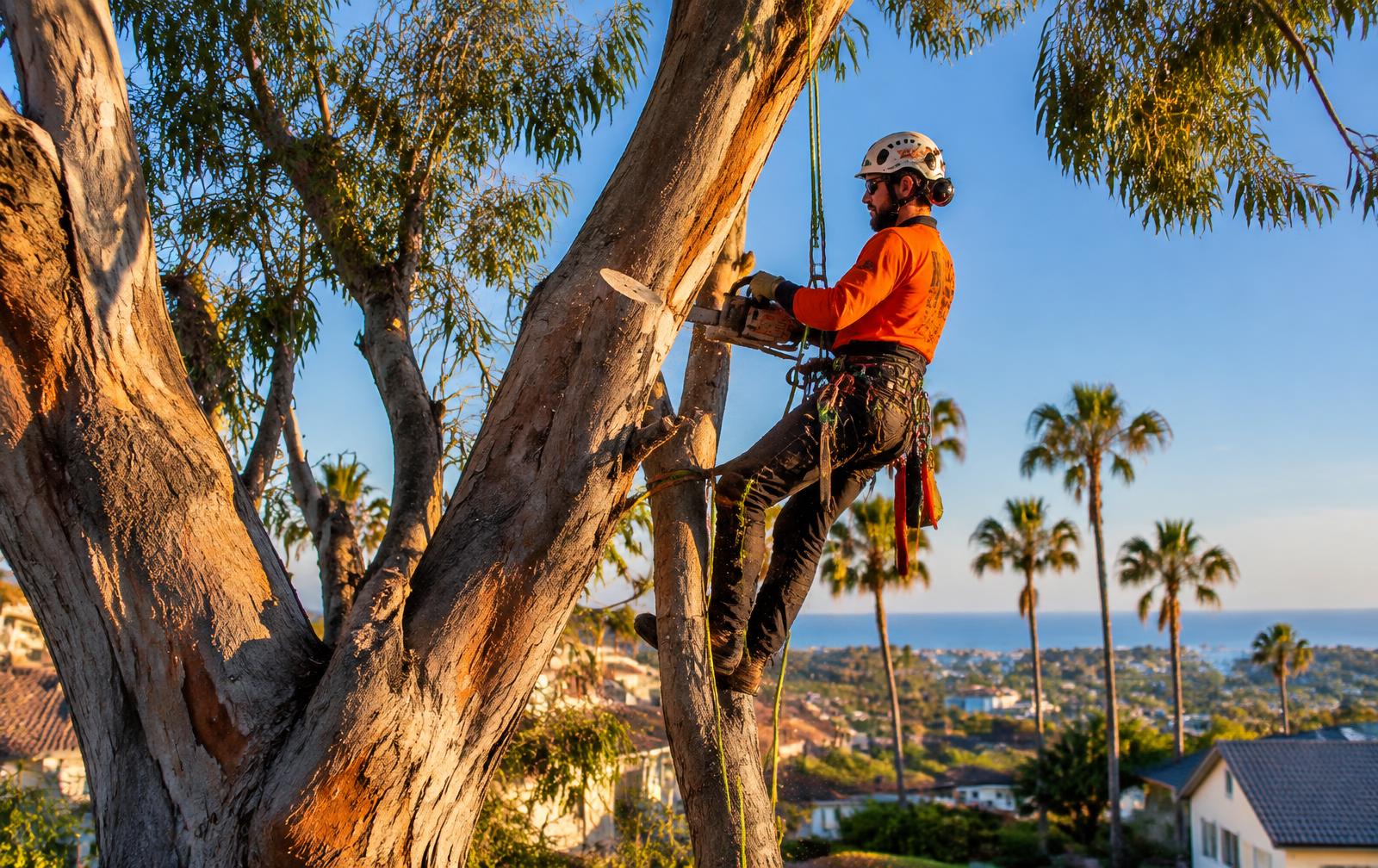
Palm work and canopy pruning are different requests
Page 65 of the City’s December 2025 maps recommends ash species, Canary Island pine, jacaranda, oak species, queen palm and sycamore species for Wilshire Square street-tree locations. The map is not a survey of every tree already growing nearby. It does show why a generic “trim all trees” request leaves important details unresolved.
If your property has a palm and a broadleaf tree, describe each separately. For the palm, identify the debris or clearance issue; for the broadleaf tree, identify the branch conflict or condition concern. Ask the provider what material will be removed from each and how the work method differs. A shared visit should not mean an identical treatment.
Make debris removal part of the written scope
Before work begins, decide whether wood, palm material and stump chips will be hauled away or left on site. Do not assume everything can go into the same curbside container. Ask the provider to explain disposal arrangements and any exclusions so the project does not finish with a pile you did not plan to manage.
For trees behind a gate or fence, show how debris can reach the street. Tell the provider whether a driveway must remain usable or a garden bed should be protected. If material will be retained for mulch or another use, agree on where it will be placed rather than having it spread across the root zone or lawn by default.
Choose removal only after the goal is understood
A tall pine, a flowering canopy and a palm near a roof can raise very different questions. Ask whether the concern is tree condition, branch clearance, falling debris or the future use of the space. A written recommendation should explain why pruning, monitoring or removal fits that concern.
If a new tree is part of the plan, consider mature size and the room available for roots and canopy. Street-tree replacements require City coordination even if the species appears on Wilshire Square’s map. For a private-yard planting, ask about the specific location and avoid choosing a tree solely because it appears on a neighborhood list.
City-recommended street trees for Wilshire Square
The City recommends the following palette for this neighborhood. It is not an inventory of existing trees or a recommendation for every private yard. Final public-tree choices depend on the actual planting site.
- Ash species
- Canary Island pine
- Jacaranda
- Oak species
- Queen palm
- Sycamore species
Read the City’s Wilshire Square map — page 65
The City’s map instructions require coordination and approval for planting or replacing a street tree in a parkway or public right-of-way. Before ordering, contact Public Works Tree Maintenance at (714) 647-3380 for the final approved species recommendation. This is the City’s number, not our estimate line.
Request tree work in Wilshire Square
Choose the service that matches your project for a fuller explanation of the work, assessment questions and quote considerations. Availability and scheduling are confirmed directly by participating providers.
Wilshire Square tree care questions
Does Wilshire Square’s map include queen palms?
Yes. Queen palm is among the recommendations on page 65, alongside ash, Canary Island pine, jacaranda, oak and sycamore species. The list is not proof of the species on a particular property.
Can one estimate cover palm cleanup and shade-tree pruning?
Yes, but ask for separate scopes describing the treatment and cleanup for each tree. Different tree types and access conditions can require different work methods.
Will all debris automatically be removed?
Only if that is included in the agreement. Ask about wood, palm material, stump chips and any disposal exclusions before accepting the estimate.
Can a pine be made much shorter instead of removed?
Do not assume drastic height reduction is appropriate. Have its condition and your objective assessed, and ask for alternatives. University of California advises against topping mature trees.
Sources and scope
Local planting information comes from the City’s December 2025 maps, including the site-approval instructions on page 2. General tree-care guidance comes from University of California resources linked above. These sources do not establish the condition of your tree, property-specific permits or a provider’s credentials.
- City of Santa Ana: Neighborhood Street Tree Species Maps
- City map instructions: public-tree planting and approval
- University of California: pruning and avoiding topping
Santa Ana Tree Care is a free referral service. We are not a tree service contractor. When you request an estimate, we share your request with one or more independent, participating tree service providers in the Santa Ana area who may contact you. Always confirm a provider's license and insurance before hiring.