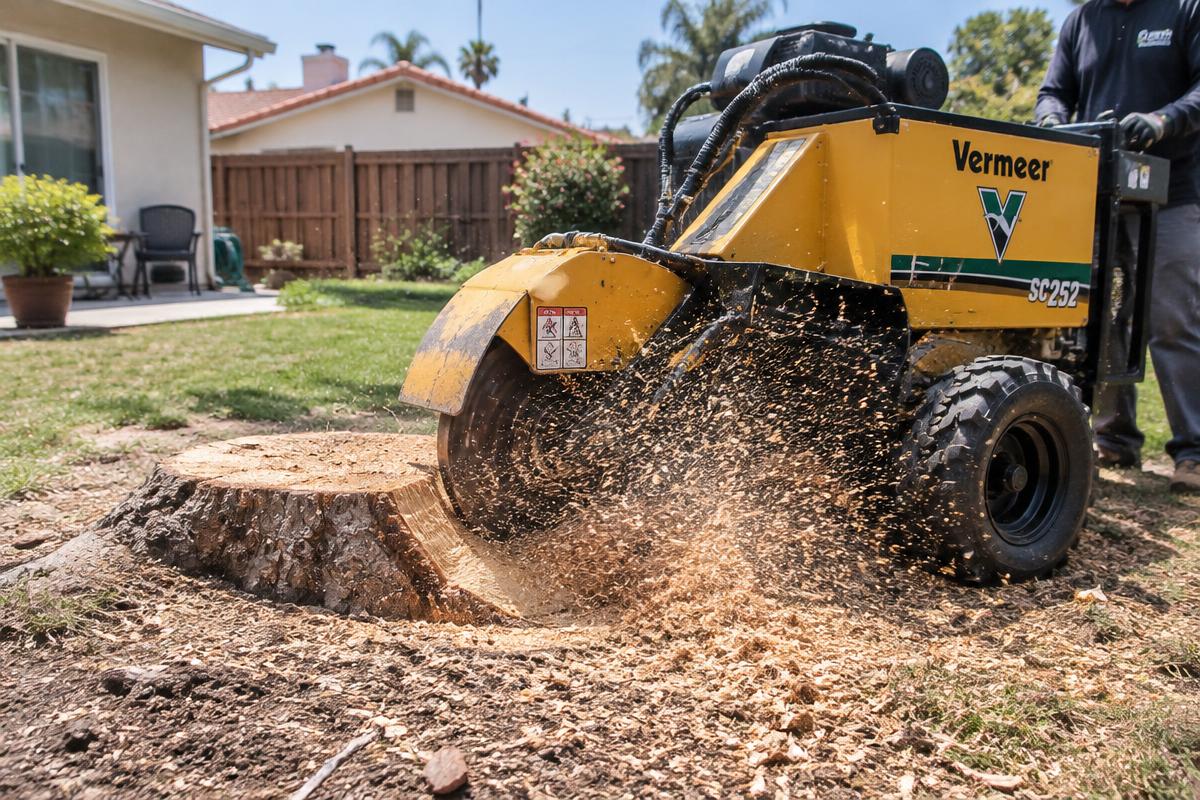
What stump grinding actually removes
Stump grinding uses a powered cutting wheel to break the visible stump and a specified portion below the surrounding soil into small pieces. It generally avoids excavating the entire root system, which can make it a practical option where broad digging would disturb the yard. The achievable result depends on equipment access, the stump’s position, and nearby underground or surface obstacles.
Grinding is not the same as complete root removal or preparing a site for construction. Many roots remain underground and decay over time, and the finished area usually contains a mix of wood chips and soil. Explain your next use for the spot before requesting a depth, because lawn repair, a planting bed, and a foundation project have different preparation requirements.
Why property owners grind stumps
Stumps can become obstacles in a small yard, interrupt mowing routes, or occupy space needed for a new landscape layout. A low stump hidden in grass may be easy to overlook, while larger surface roots can complicate maintenance. Grinding may help address the central obstruction, but ask the provider to identify which exposed roots are included and which will remain.
Some owners want to replant immediately or install hardscape where a tree once stood. Those plans need more discussion than simply making the stump disappear below grade. Remaining roots, decomposing wood, soil settlement, and nearby utilities may affect the next project. Depending on the intended use, excavation or additional preparation could be more appropriate than grinding alone at that location.
How a grinding project is planned
We connect you with local tree pros who can review the stump’s dimensions, location, and available route for equipment. Measure the narrowest gate or passage and mention steps, slopes, decorative paving, and low overhead clearance. Photographs should show both the stump and the route from the street, since a clear view of the stump alone does not establish machine access.
Before work begins, confirm the process for locating underground utilities and identifying private irrigation, lighting cables, and other buried features. Discuss chip removal, backfill, and the final grade in writing. Ask for proof of applicable California CSLB licensing and insurance. The provider should also explain what happens if buried concrete, metal, or utilities prevent completing the originally proposed grinding depth.
- Share stump dimensions, access measurements, and your intended use afterward.
- Confirm underground utility locating and identify private buried systems.
- Agree on grinding depth, root scope, chip handling, and surface protection.
- Review the remaining material and plan soil restoration or replanting.
Stump grinding cost considerations
Stump diameter, root flare, wood condition, and the requested grinding depth affect the work involved. Access can be equally important: transporting equipment through a narrow side yard differs from reaching a stump beside a driveway. Slopes, nearby masonry, and the need to shield windows or planted areas may also change how the job is set up and carried out.
Chip hauling and soil replacement can make otherwise similar proposals very different. Ask whether the estimate includes exposed roots, removal of excess grindings, imported soil, or only grinding the central stump. Multiple stumps may involve a different setup plan than a single location. Hidden debris or underground obstructions should have a clear change-approval process rather than an assumed allowance for unlimited extra work.
Santa Ana site considerations
Older Santa Ana lots may have narrow gates, mature landscaping, and buried irrigation that has changed over many years. Large ficus surface roots can extend well beyond the stump, while palm bases leave a different mix of fibrous material. Describe the former tree if you know it, and do not assume every remaining root can be reached without disturbing adjacent paving.
In Santa Ana’s dry weather, discuss how to manage dust and protect nearby plants while planning the work. If the stump is in a city parkway or close to public improvements, rules and ownership considerations can apply; check with the City of Santa Ana before authorizing disturbance. Utility locating and identification of private buried lines remain important even for a small stump.
Stump Grinding FAQs
Will grinding remove every root?
No. Grinding generally targets the stump and specifically agreed roots. The wider root system usually remains underground.
Can I plant a new tree in the same spot?
Possibly, but remaining roots, chips, soil condition, and available rooting space need evaluation. A nearby location may be more practical.
Are the wood chips removed automatically?
Not necessarily. Agree on chip hauling, backfill, and final grading before work begins.
Will the ground settle later?
It can. Remaining wood and roots decompose, and loose fill may settle. Discuss appropriate soil preparation and follow-up maintenance.
Can a grinder fit through my side gate?
Equipment dimensions vary. Give the provider the narrowest opening, turns, steps, and surface conditions along the entire access route.