What purposeful pruning involves
Pruning is the selective removal or shortening of branches to achieve a defined biological or structural goal. That might mean developing a young tree’s framework, reducing the load on a particular limb, or removing dead and damaged growth. A local professional should consider how each cut affects future growth, rather than judging success by the amount of wood removed.
For established trees, an appropriate plan may be conservative and staged over time. Large cuts create lasting wounds, and an old tree cannot simply be reshaped like a shrub without consequences. Ask how the proposed work preserves useful foliage, avoids unnecessary injury, and responds to existing defects. An ISA-certified arborist can be helpful when evaluating competing goals or complicated structural concerns.
Reasons to request a pruning assessment
Young trees with competing upright stems or poorly placed branches can benefit from an early structural review. Small, well-planned interventions may guide growth before branches become large and difficult to manage. Explain the intended mature space, including nearby roofs and pedestrian routes, so the professional can consider the tree’s future form rather than only its current size and appearance.
Mature trees may need assessment after limb breakage, rubbing branches, or changes in canopy condition. Pruning is not a cure for every decline: root damage, irrigation problems, soil conditions, and disease may require separate investigation. If foliage is thinning or branches are dying back, ask the provider to discuss possible causes before assuming that further canopy removal will improve tree health.
How a pruning plan is developed
We connect you with local tree pros who can start with your goals and the tree’s condition. Share previous pruning history, recent construction, changes in watering, and any branch failures you have observed. These details help distinguish a structural maintenance project from a problem that may need a more detailed arborist assessment before anyone begins making permanent cuts.
Request a scope that describes the pruning objective, the general branches involved, and any recommended staging. Discuss seasonal considerations for that species and whether removing particular limbs would sacrifice flowers or shade. Before authorization, ask about applicable California CSLB licensing and insurance. The finished result should be evaluated against the agreed objective, not whether the canopy looks dramatically smaller afterward.
- Identify the species, age class, site constraints, and pruning goal.
- Review branch structure and any symptoms needing further assessment.
- Agree on selective cuts, timing, and a conservative work scope.
- Discuss follow-up observation and future structural care.
What influences pruning costs
The level of assessment and precision involved can matter as much as the tree’s height. Guiding a young tree’s structure differs from reducing selected limbs high in an established canopy. Branch accessibility, defects that complicate climbing, nearby structures, and the need to lower cut material carefully all influence the labor and equipment required for an appropriate pruning plan.
A proposal may also account for multiple visits when the recommended work should be staged. Clarify whether an arborist consultation, written observations, debris removal, or follow-up assessment is included. Comparing a selective pruning plan with a general trimming quote can be misleading if the objectives differ. Ask each provider to explain the purpose of the proposed cuts and the expected limits of the work.
Pruning considerations in Santa Ana
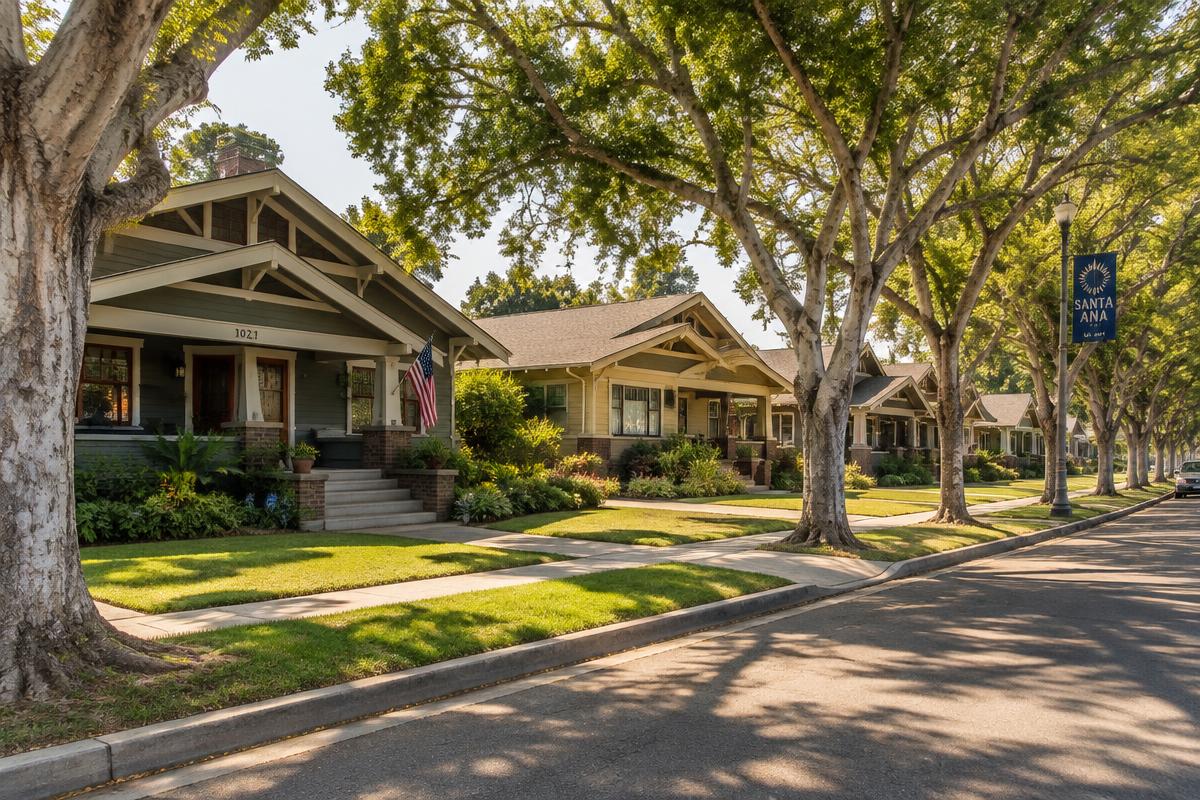
Santa Ana’s jacarandas, sycamores, ficus, and eucalyptus differ in mature size, branching patterns, and responses to pruning. Timing should account for the species, current condition, and local growing conditions rather than following a single calendar rule. On paved or drought-stressed sites, retaining sufficient foliage and avoiding unnecessary exposure of previously shaded branches can be important parts of a conservative care plan.
Santa Ana winds add urgency to assessing broken or weakly attached branches, but excessive thinning is not a universal answer. Older trees in historic neighborhoods may need staged work that respects existing structure and limited access. Where a tree occupies a city parkway or ownership is unclear, rules can apply; check with the City of Santa Ana before proceeding with pruning.
Tree Pruning FAQs
Can pruning repair a split trunk?
Pruning alone does not repair a split. Keep away from the affected area and request an assessment; a professional can discuss retention, further evaluation, or removal.
Is young-tree pruning worthwhile?
Early structural guidance can address competing stems and poorly placed branches while cuts are relatively small. The plan should suit the species and mature location.
Will pruning make a declining tree healthy?
Not necessarily. Decline can involve roots, soil, water, disease, or other factors. Diagnosis should guide whether pruning is helpful.
Should every tree be pruned in winter?
No single season suits every species and objective. Ask about species-specific timing, current stress, and whether damaged branches need earlier attention.
Can I request an ISA-certified arborist?
Yes. Ask the provider whether an ISA-certified arborist can assess the tree and verify that individual’s current credential independently.